

In 2026, Senegal faces a rare situation: public-sector debt is estimated at approximately 132% of GDP, following the discovery of previously undeclared liabilities, a suspended IMF program, and increased dependence on domestic and regional financing. In 2025, the government had to cover an exceptional gross financing need (high deficit, significant amortization, and arrears) by turning to the WAEMU market, syndications, and guaranteed structures (including Total Return Swaps), which now concentrates maturities between 2026 and 2028 and increases refinancing risk. The tipping point is near: as early as March 2026, a tranche of Eurobonds (€333 million) and more than 510 billion CFA francs of external debt are due in that single month.
-
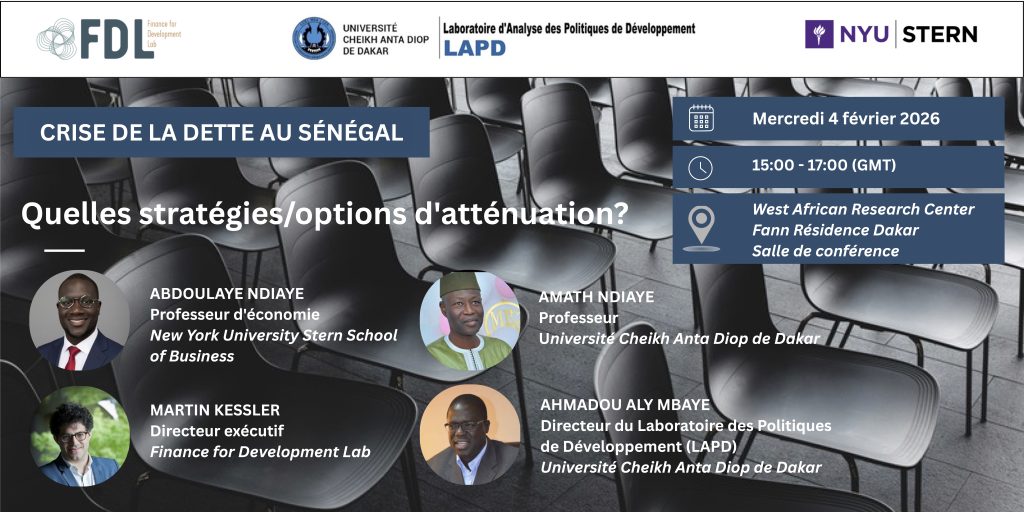
Wednesday 4th February 2026
-
3:00 - 5:00 pm (GMT)
-
West African Research Center, Dakar, Senegal & ONLINE (zoom)
Based on the Ndiaye-Kessler report, the conference will establish the central diagnosis—a liquidity and credibility crisis—and structure the debate around a strategic choice. On the one hand, there will be an exit “without restructuring,” described as a narrow corridor, requiring both politically sustainable fiscal consolidation and massive refinancing at very low cost. On the other hand, there will be a treatment of external debt (bilateral and private) supported by an IMF program, aiming for a rapid and complete resolution, while protecting CFA franc debt held within the WAEMU to limit regional banking contagion.
The discussion will clarify the conditions for success, including scope, sequencing, rapid private sector involvement, and political commitments from major official creditors, as well as the trade-offs between adjustment, growth, and macro-financial stability. The conference will feature:
- A presentation by Abdoulaye Ndiaye, Professor of Economics at New York University Stern School of Business, and Martin Kessler, Executive Director of the Finance for Development Lab; and
- Remarks from Professor Amath Ndiaye of Cheikh Anta Diop University of Dakar and Professor Aly Mbaye, Director of the Laboratory for Development Policy Analysis.