

FDL regularly hosts independent analyses and opinions on this space, we are grateful to host this external contribution by Alex Dryden and Uli Volz.
Alex Dryden is a PhD student in economics and a Doctoral Research Fellow at the Centre for Sustainable Finance at SOAS University of London.
Ulrich Volz is a professor of economics and director of the Centre for Sustainable Finance at SOAS University of London.
Developing country borrowers are once again in turbulent seas. For many emerging and low-income countries, capital markets promised access to affordable, long-term finance for development and climate resilience. But as global interest rates rose sharply between 2021 and 2022 and investor appetite for developing country debt cooled, these promises proved increasingly elusive. Many developing countries effectively lost access to international capital markets.
In 2025, market conditions had eased, allowing some developing countries to regain access to bond markets. This partial reopening allowed countries to once again issue expensive Eurobonds. So far in 2026, Sub-Saharan African Eurobond sales are off to their fastest start to a year in 13 years, raising more than $10bn in the first half of 2026. However, the outlook has once again clouded over. Conditions briefly tightened after the conflict in Iran began in March: the yield on the Bloomberg EM USD Aggregate Index rose to 6.2%, around 0.6 percentage points higher in less than a month. However, much of the initial rise in frontier-market yields reflected higher US benchmark rates, while sovereign spreads widened only briefly before retracing.
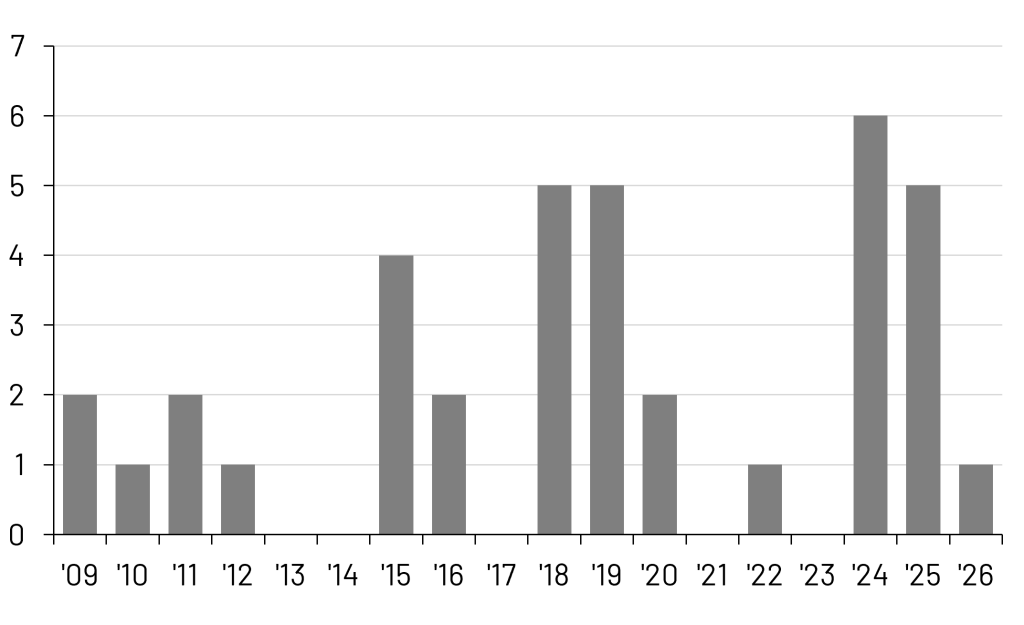
The last 18 months have seen a wave of issuance at punishingly high double-digit yields. This risks storing up future debt problems for countries already navigating difficult fiscal conditions. In capital markets, thhas long been seen as a marker of debt distress. Bonds issued at such elevated rates often signal strained public finances, deteriorating creditworthiness, or limited alternatives. Historically, such issuance was rare. Between 2009 and 2019, only 19 bonds were issued at yields above 9.5%.
Issuers include Gabon, Nigeria, Angola and Kenya, all facing significant fiscal pressures. Gabon returned to markets in February 2025 with a $600 million bond yielding 12.7% – the highest ever recorded for an African Eurobond. Kenya followed a month later, raising $1.5 billion at 9.95%. The trend continued through late 2025 as Laos, Angola and the Republic of Congo issued a further $2 billion in high-cost dollar debt. Congo returned again in February 2026, raising another $700 million at 9.5%.
Number of Eurobond issuances with a coupon greater than 9.5% per year, 2009-2026:Q1
Source: Updated figures from Dryden & Volz (2025)
The return of expensive borrowing reflects a more fragmented global financial environment. Major central banks began cutting policy rates during 2024 and 2025, but that easing did not translate into a sustained fall in longer-term borrowing costs for developing countries. Benchmark yields rose again in early 2026 as inflation and geopolitical concerns returned – average yields on dollar-denominated emerging market debt have risen from 4.8% at the end of 2019 to more than 5.5% as of June 2026. Concerns over sovereign risk, uneven investor appetite and, more recently, conflict in the Middle East have kept financing conditions difficult.
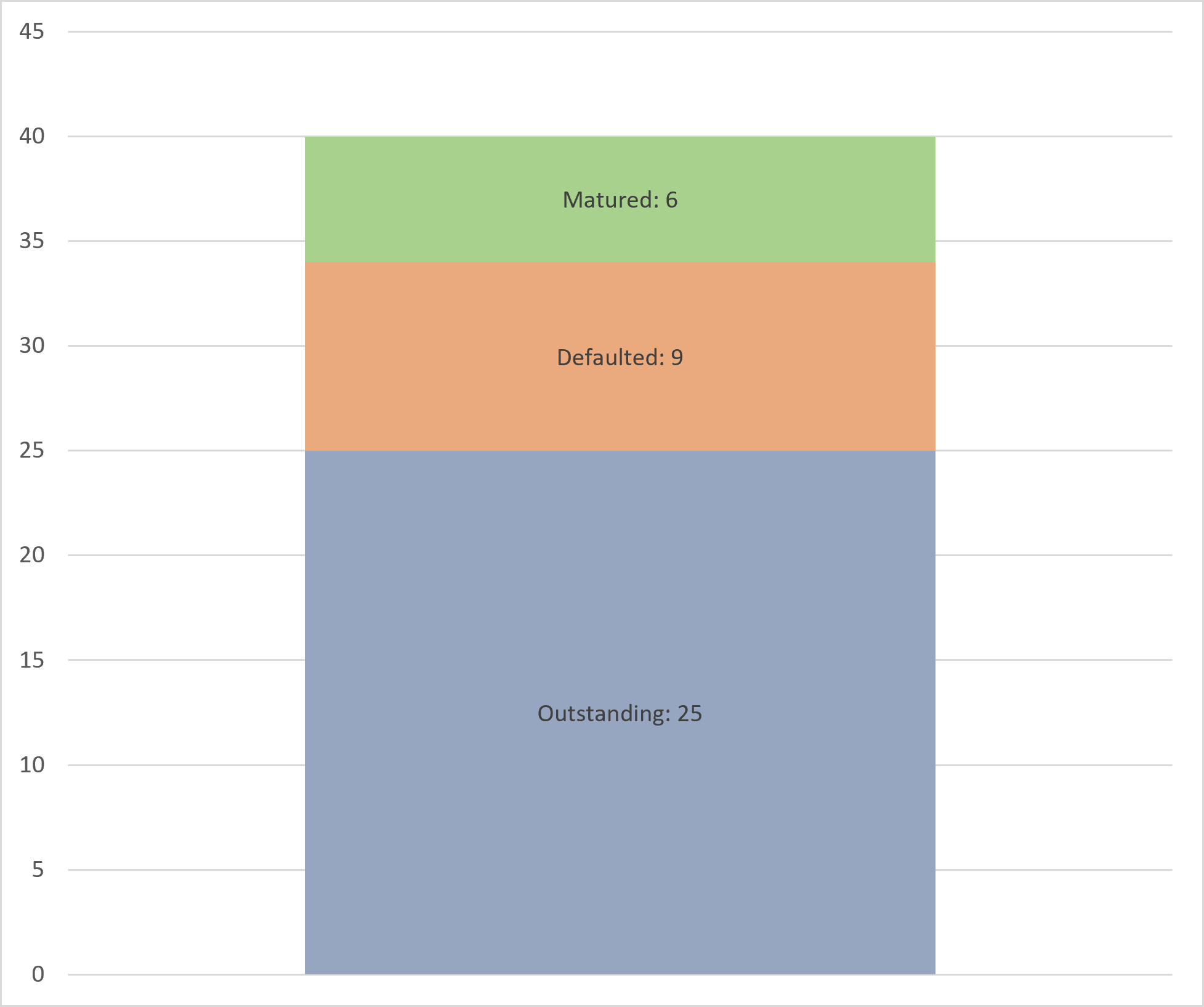
Number and status of bonds issued with a coupon greater than 9.5% between 2009 and 2026:Q2
Source: Updated figures from Dryden & Volz (2025)
Unfortunately, this expensive borrowing rarely ends well. Between 2009 and the second quarter of 2026, 40 Eurobonds were issued with a coupon of above 9.5%. Of these, only six have matured successfully and nine have defaulted. In other words, nearly a quarter of the bonds issued have ended in default. With the latest round of expensive issuances, it is likely that we will see more low-income nations struggling with debt distress and ultimately default.
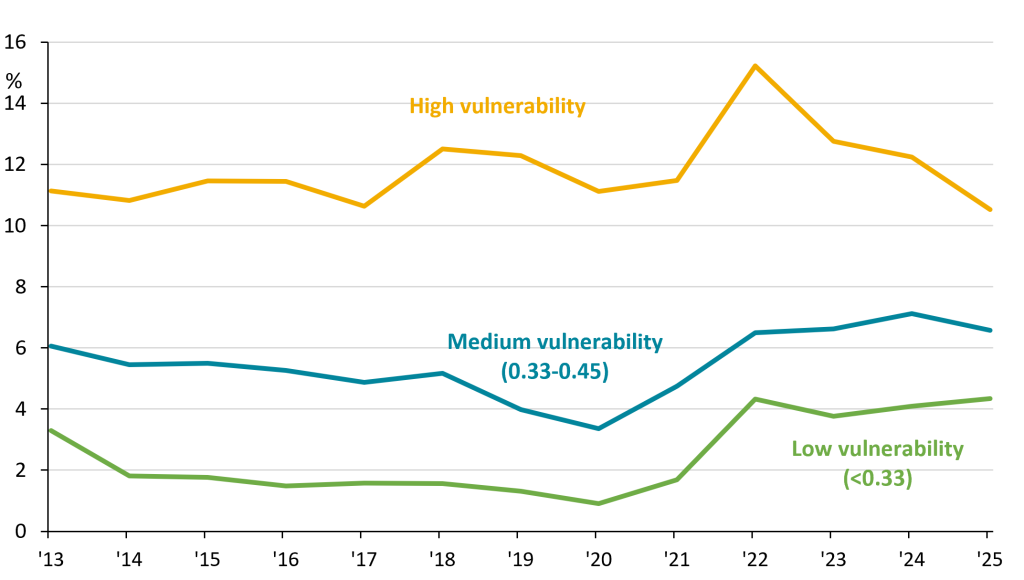
For climate-vulnerable countries, the financial risks are particularly acute. Many low-income nations urgently need long-term investment to adapt to rising temperatures, strengthen climate resilience and recover from climate shocks, yet the most climate vulnerable countries face some of the most punitive borrowing conditions in global markets. Indeed, our analysis using the ND-GAIN climate vulnerability index shows that the more climate-vulnerable a country is, the higher its borrowing costs in international debt markets. In many instances, these countries are effectively shut out of markets altogether, unable to borrow even when global liquidity is abundant. The result is a that countries most in need of adaptation funding are those the market penalizes the most.
Source: Updated figures from Dryden & Volz (2025)
After suffering its worst drought in four decades, severe flooding and lingering pandemic effects, the secondary market yield on Kenya’s dollar debt climbed to almost 17% in 2023. With limited alternatives, it returned to markets at nearly 10% simply to avoid a funding crisis. Despite receiving concessional support from the IMF’s Resilience and Sustainability Facility, much of the climate-linked financing was de facto diverted to service external debt. Indeed, Kenya’s 2034 bond is trading at a 12% discount to face value – suggesting that investors continue to fret over the country’s long-term fiscal health as well as how the country will navigate the latest spike in global energy prices.
This is not just a problem for individual countries. It reflects a deeper flaw in the way international capital markets finance development and climate adaptation. Countries most exposed to climate shocks are often those charged the highest borrowing costs. Volatile capital flows and sudden stops make markets a source of fragility precisely when resilience is needed most.
A course correction is needed. Vulnerable countries should not be forced to borrow from international capital markets at punitive rates. Multilateral development banks and climate funds must play a larger role in channeling affordable finance. Risk-sharing instruments such as catastrophe clauses and state-contingent debt should become standard rather than exceptional. The current practice – where the most vulnerable countries face the highest borrowing costs – is not just flawed. It is fundamentally unfair.
Stormy waters lie ahead, but there is still time to change course.