

Tracing the Drivers of Sub-Saharan Africa’s Low Sovereign Credit Ratings
Sovereign credit ratings are crucial to Sub-Saharan Africa’s (SSA’s) financial landscape, yet debates continue over their accuracy, fairness, and impact.
In 1994, only South Africa had a sovereign rating, but over the past two decades, three major international credit rating agencies (CRAs) - S&P Global, Fitch, and Moody’s - have significantly expanded their coverage of the region. By the end of 2024, 31 countries in Sub-Saharan Africa (SSA) had a rating from at least one CRA, with Chad being the latest to receive a rating from S&P and Fitch in October 2024.
While access to global capital has widened SSA’s financing options, it has also exposed the region to high borrowing costs and sudden shifts in investor sentiment. SSA countries have paid a steep premium compared to peers to access international bond markets, resulting in an elevated cost of capital even in a low global interest rate environment.
In light of these challenges, SSA sovereign ratings have been subject to intense scrutiny. This paper analysis highlights the major role of structural factors in anchoring SSA sovereign ratings at the lower end of the global scale.
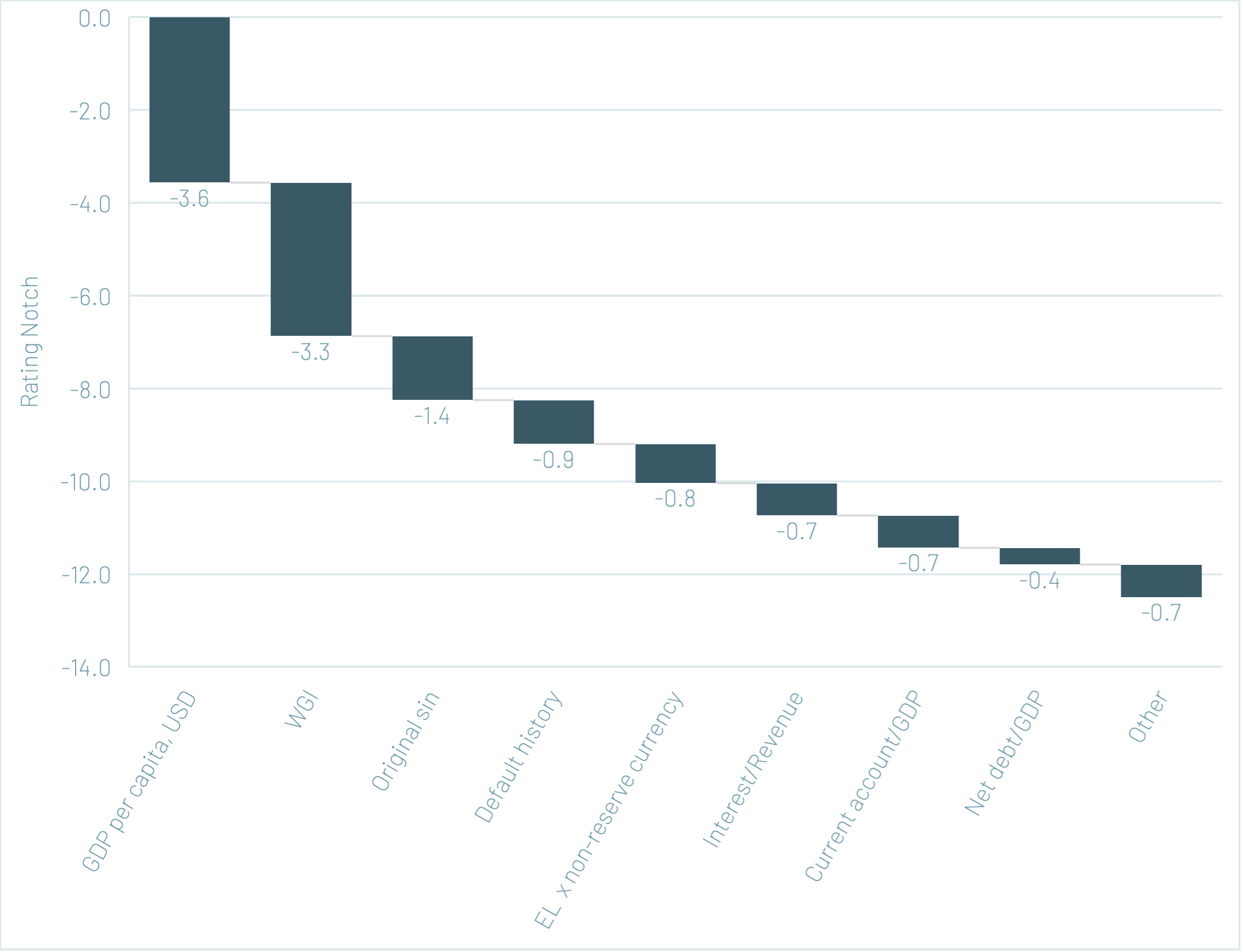
- The results show that slow-moving structural indicators - particularly GDP per capita and institutional quality - are the most influential rating drivers, together explaining more than half of the gap between the median rating for SSA sovereigns and those of advanced economies. Reserve currency status is another rating driver that benefits many advanced economies, widening the rating gap with SSA.
- The analysis also highlights the role of fiscal and external vulnerabilities in constraining the ratings of SSA.
- At the same time, the study finds no statistical evidence of differentiated treatment of SSA sovereigns by S&P: after accounting for income levels, the quality of institutions, and other credit-relevant factors, there is no indication of a systematic downward (or upward) adjustment of SSA ratings.

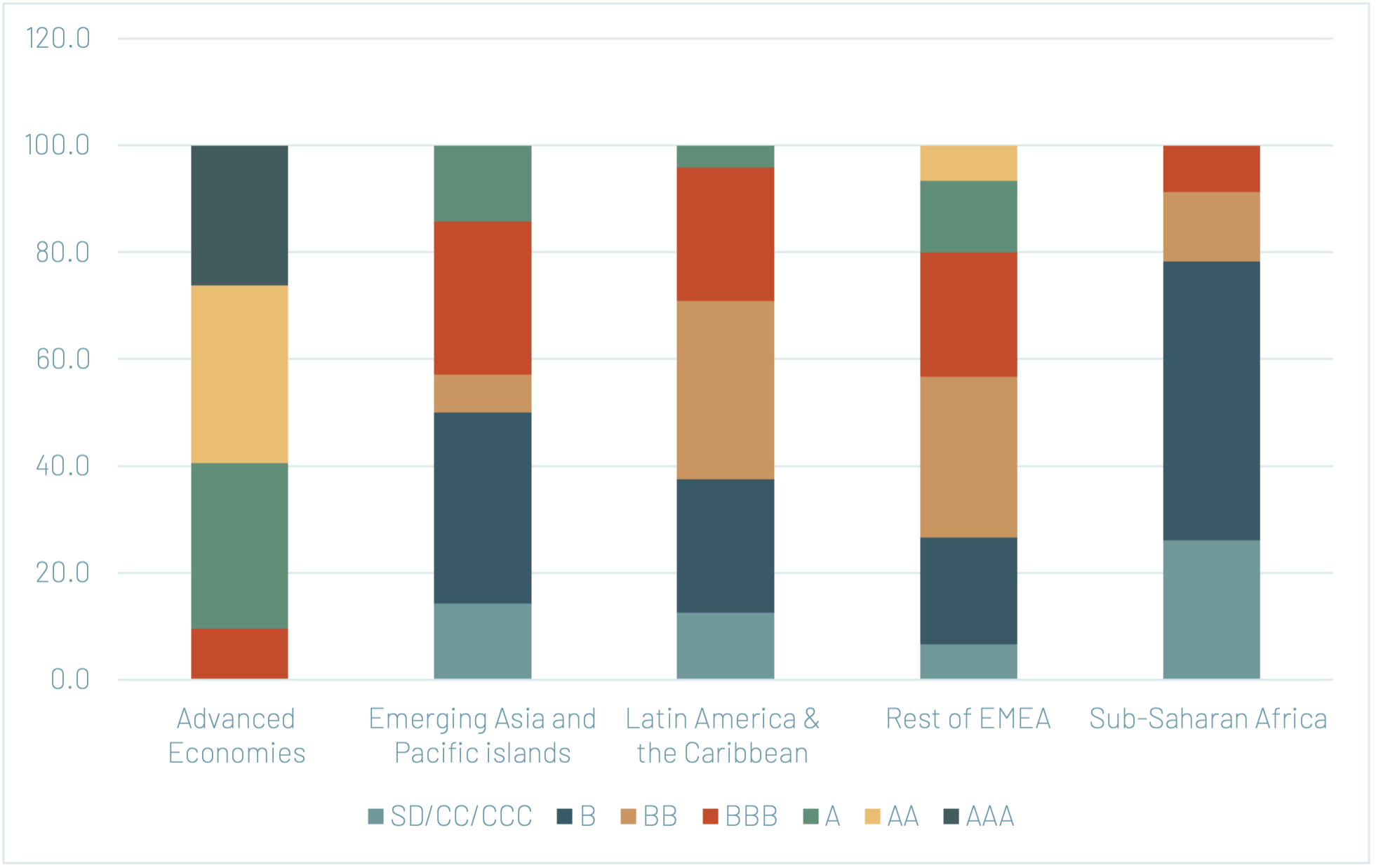
Sovereign ratings distribution (S&P)
Key drivers of the rating gap between SSA and AEs (estimates based on S&P data)

These findings underscore the complexity of the discussion of the fairness of SSA ratings and the need to distinguish between different interpretations.
Further research is needed to assess whether the heavy emphasis on slow-moving structural indicators in sovereign ratings is warranted. A better understanding of their actual predictive power – and of the potential for more forward-looking and dynamic approaches to risk assessment – could help make the sovereign rating system more equitable and better aligned with the development needs of SSA countries.