

Eurobond Market: The tide is rising, but not all boats are equal
In a pivotal moment for emerging markets, international capital markets have reopened after two years of closures, sparking a surge in issuance volumes and a narrowing of spreads.
This new analysis explores whether this marks the beginning of a golden age for EM debt, while highlighting critical warnings that accompany this renewed access to capital.
The current optimism regarding EM debt is tempered by caution, as genuine macroeconomic resilience may be obscured by favorable global conditions.
Divergent experiences among sovereign issuers reveal a troubling landscape where some benefit from lower yields while others face prohibitive borrowing costs.
Case Studies: Navigating a Complex Landscape
The paper presents detailed case studies of countries such as Kenya, Nigeria, and Suriname. While these nations have seen marginal improvements in financing conditions, they still grapple with high capital costs. For example, while Kenya has successfully issued Eurobonds at lower yields than prior issues, it continues to prioritize market financing over potentially costly IMF programs. Conversely, countries like Laos and the Republic of Congo illustrate the challenges faced by lower-rated issuers, entering the market under distressing conditions, thus raising concerns about long-term debt sustainability.
Long-Term Implications for Global Finance
The reopening of capital markets, while temporarily relieving liquidity pressures for some emerging nations, risks entrenching long-term vulnerabilities for the most fragile sovereigns. As countries allocate a significant portion of their revenues to debt service, the pressures on social and economic investments could pose critical risks to sustainable growth. This report emphasizes the necessity for investors and policymakers to navigate these complexities thoughtfully, ensuring that emerging markets capitalize on the current trends without compromising future stability.
 Source: Refinitiv. Eurobonds in EUR and USD maturing in 5 to 15 years are selected. Average weighted by issued amount.
 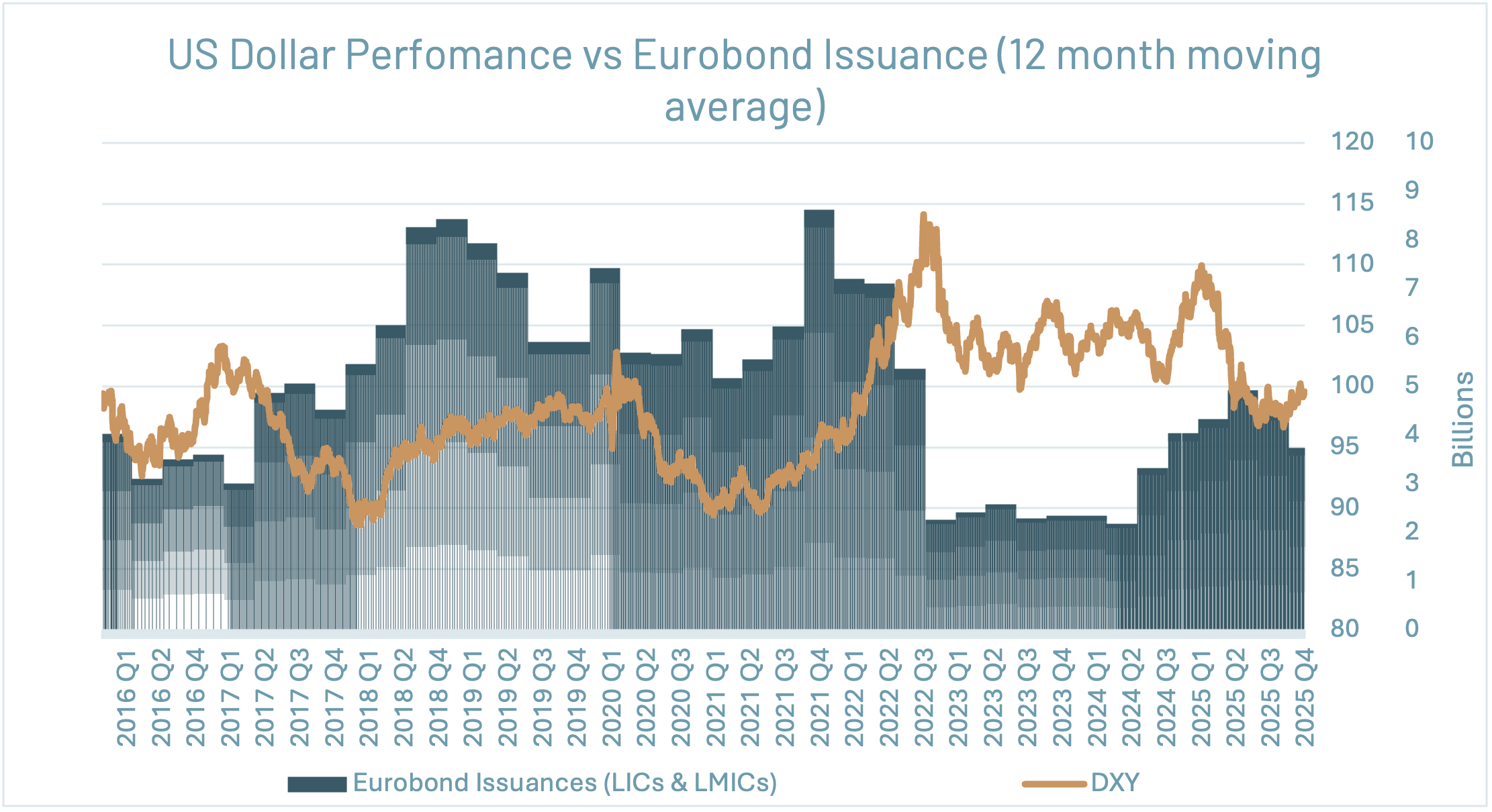 Source: Refinitiv. Eurobonds with a maturity superior to 2 years are included.